

"Corporate hot potato" (informal)
More formal or technical terms include:
1. Serial Acquisition Target
A company that is frequently bought and sold by different parent companies over time.
2. Portfolio Company
When a company is owned by private equity or venture capital, it is called a portfolio company. If it is passed between different investment firms, it's often viewed as being "shopped around."
3. Spin‐off/Divestiture Subject
Sometimes a company is repeatedly spun off or divested by larger parent corporations, suggesting it has not found a stable long‐term owner.
4. Orphaned Asset (context‐specific)
A term used when a company or business unit becomes strategically misaligned with its parent and is sold off—sometimes more than once.
5. Acquisition Football (colloquial)
Used informally to describe a company being "kicked" from one owner to another.
Over time most of these boxes will be checked.
We continue the story of how all those boxes got checked.
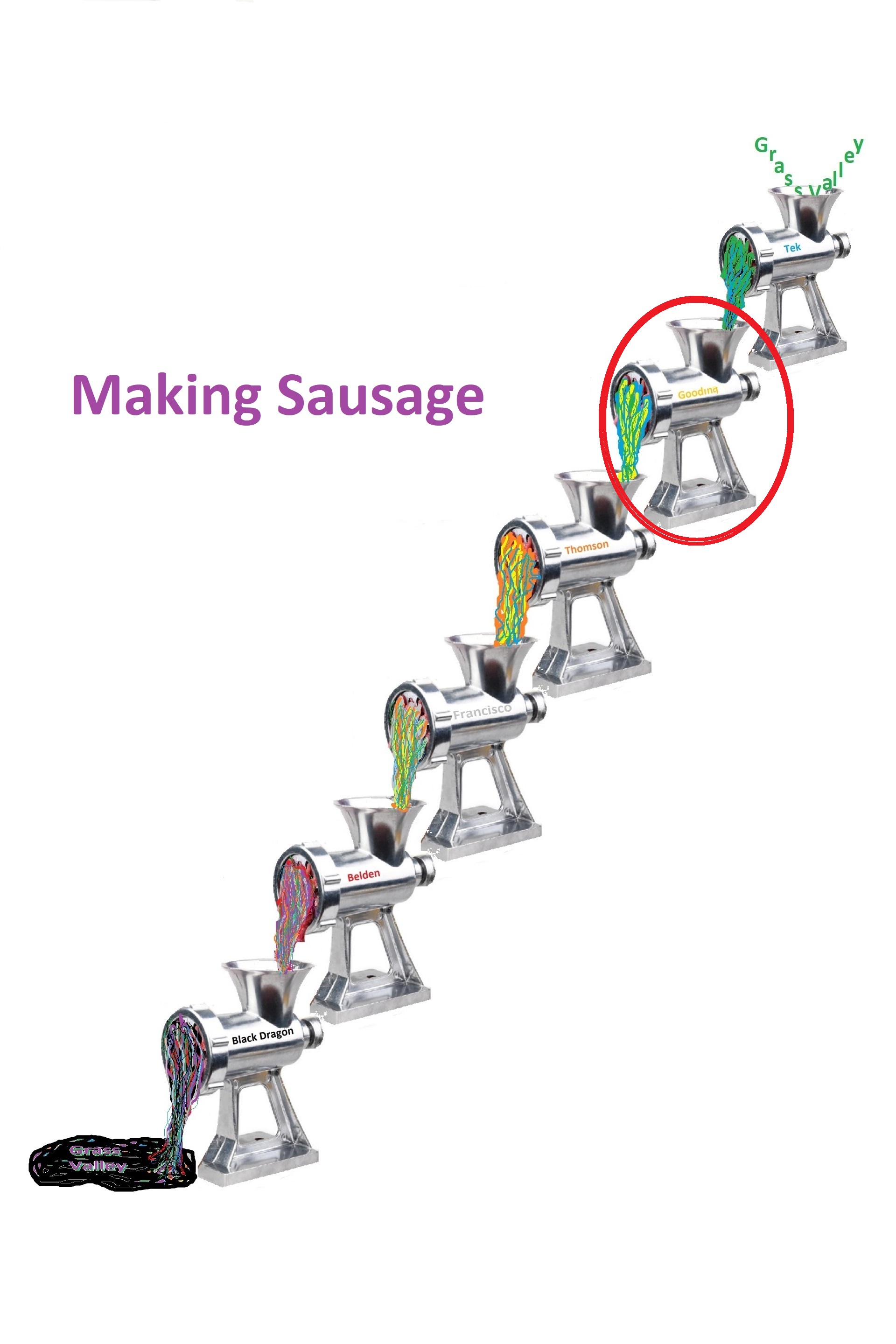
Here's where we will check our first boxes. To Tektronix, Grass Valley had become an "orphaned asset" as the company had become strategically misaligned with its parent.
By the end of the last century, Tek's thinking finally fell in line with Soros. Meyers had been running the numbers each year through the '90s to see if more value was wrung out of the company by keeping it together or splitting it apart. By the end of that last decade, with Printers growing and VND and the group cratering, the time had come. Tektronix divested its printing, video, and networking divisions. The printing business was sold to Xerox. Tek itself went back to concentrating on its test equipment roots.
It sold the video business to a private investor, Terence Gooding of San Diego, California, who reincorporated it under the name Grass Valley Group, Inc. The sale closed on September 24, 1999. Tektronix kept a 10% equity stake in the new venture, which continued to be based in Nevada City, with an engineering design center inherited from Tektronix in Beaverton, Ore. While Tek had dropped the "Group" from the name a few years prior, Gooding added the moniker back, so the company again was the Grass Valley Group. Besides the traditional switcher and router markets, the Group kept the Profile server group up in Oregon.
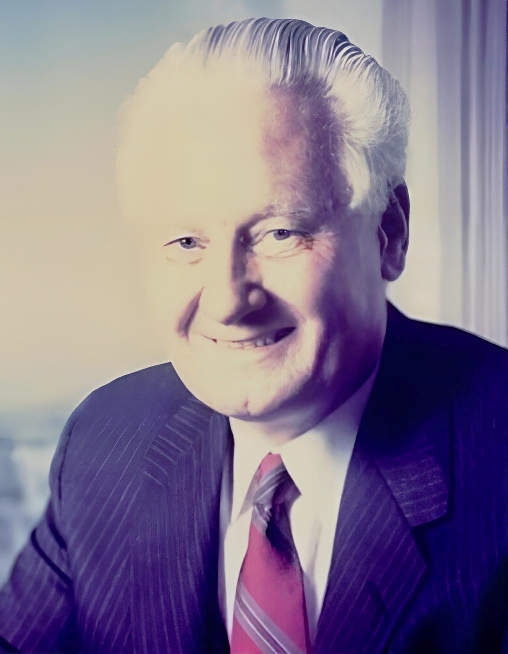
Gooding and his investment partners were considered a "Portfolio Company." A private equity or venture capital company, where Grass Valley is a company in the venture firm's portfolio.
Dr. Terence J. "Terry" Gooding (March 27, 1934–April 1, 2023) was a Welsh-American engineer, entrepreneur, and philanthropist whose brief but pivotal involvement rescued Grass Valley during a transitional period. Born in Risca, Gwent, South Wales, to Ivin and Frances Gooding (one of seven siblings), he showed early promise, entering Swansea University (now the University of Wales) at age 16 and graduating magna cum laude. A Fulbright Scholar, he earned a Ph.D. from the University of Minnesota in 1959, specializing in scientific research.
Early Career (1960s–1980s): Gooding worked in aerospace at General Dynamics Astronautics in San Diego, focusing on tracking systems and scientific R&D. He later built a portfolio in communications testing, co-chairing Wavetek Wandel Goltermann Inc. (sold to Wandel & Goltermann in 1998), the world's second-largest firm in that sector.
The GVG sale included Thorsteinson, who moved over to the new venture from Tek. Gooding served as chairman and Thorsteinson as CEO of Grass Valley Group. Larry Neitling continued as the Operations Manager. With an additional Lazard Asset Management Group investment of $34M in capital, Gooding and investment partners promised to fund the new company's working capital and acquisition needs until it reached a level of fiscal maturity appropriate for outside funding. They eventually pumped $100M into the R&D effort.
The new company had annual sales of $200 million in 2000 with 700 employees worldwide. To help build the company, it tried focusing not only on television broadcasting but also on emerging markets, such as the Internet to electronic projection, as well, with little effect.
Thorsteinson had three goals for the new company:
• A narrower focus on its strengths, namely the video server area where GVG's Profile maintained its number one market share, as well as Grass Valley switchers, routers, and modular products. Over the preceding several years, Tek had tried its hand at PCs and nonlinear editing systems but found the market to be saturated and unresponsive.
• Reducing costs, GVG consolidated from three manufacturing plants to its Providence Mine operation in Nevada City, reducing costs from $45 million per quarter to $19 million per quarter.
• Competitive pricing, including using commodity microprocessors to reduce manufacturing costs.
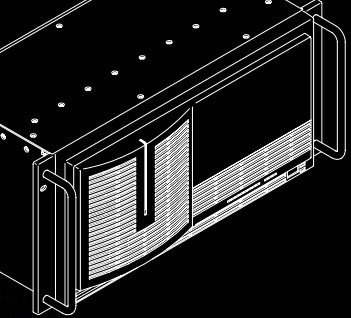
While the company was resting on the success of its Profile servers and its well‐known switchers, in a rapidly changing broadcast landscape, it gave them a little breathing room as it was again becoming competitive in its core products. The consolidation back to home turf was to last only for a couple of years. The expansion away from the Grass Valley area was soon to begin in earnest.
When Gooding took over the Group, revenues from new products introduced within the previous 12 months represented less than 10% of Tek's VND division revenues, as most of the products selling had been introduced 5 or 6 years ago. "If you don't offer new products every 18 to 24 months, you won't succeed in this business," Thorsteinson said at the time.
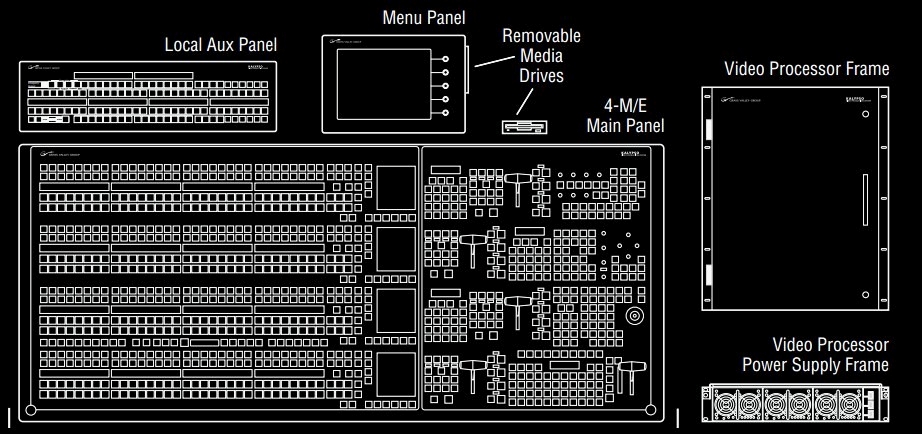
As Tek was selling the Group, it was launching a new production switcher, the Kalypso. OB operators loved it, as it had many new innovations for high-end production. Launched at IBC in 1999, it took the switcher concept another quantum leap forward, becoming what the Group called the "video production center," putting still stores (and later clip stores) and graphics file conversion right into the switcher, along with multiple effects banks and other creative power.
Thorsteinson and the group were taking additional action. They invested $60 million in research and development in 24 months to develop new products. The plan was to continue spending 13% to 15% of sales on research and development, which would be $30 to $35 million annually on R&D.
In the router realm, the company, in 2000, introduced the 7500 wideband routing system. Early on, HD reclockers for the signal did not work very well. The answer early on was to just build routers with as wide a bandwidth as possible. The 7500 could work with signals ranging from 10 KB/s to 1.485 GB/s HD bitrate.
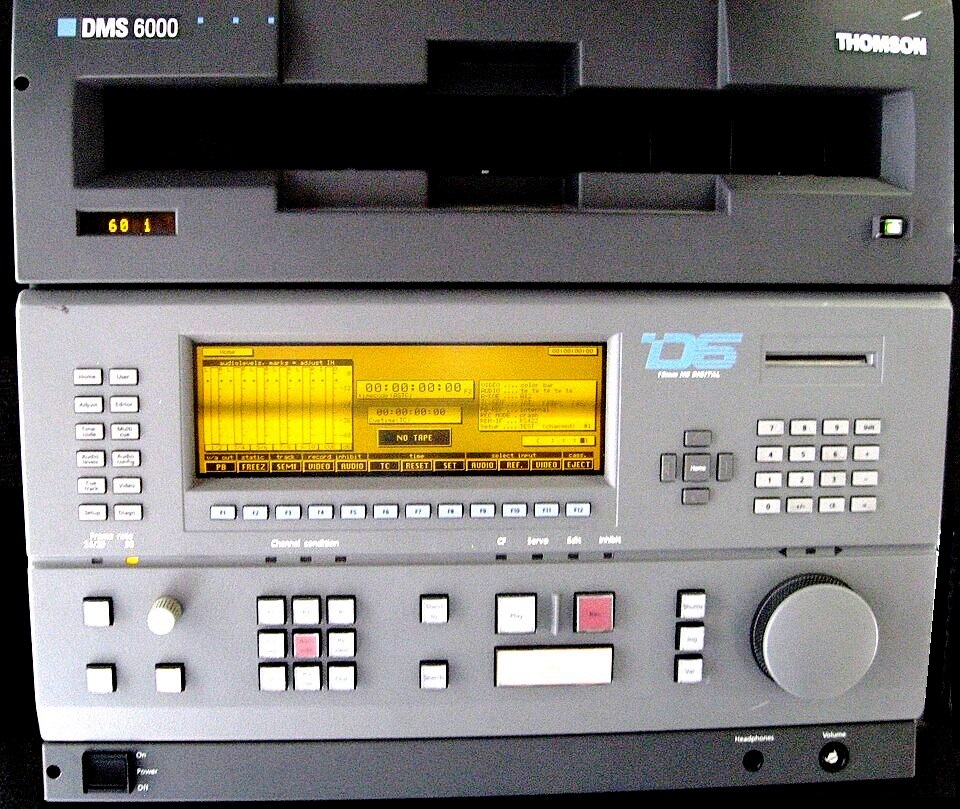
They also tried marketing the Voodoo Media Recorder. With 32 heads, this SMPTE D6 gigabit recorder could record either uncompressed HD or data streams up to 128 MB/s. While impressive, it was very expensive due to the speed and the space that uncompressed media data required. It was a bit ahead of its time technology-wise. But it found use in the film industry for its ability to function as a high-speed data recorder for the early digitization of film.
Avstar was launched, which was a joint newsroom automation project between Avid and GVG. The Group contributed its Newstar product to the effort, and while at the time Gooding said that it "remains an important part of the company's business," he also said that GVG would rely less on joint ventures moving forward. "It takes so much work to do a joint venture." He decided to sell off its Newstar product line to Avid in 2001.

In 2001, the GXF container format (informally, sometimes called a wrapper) or metafile was introduced. This was a file format that allows multiple data streams to be embedded into a single file, usually along with metadata for identifying and further detailing those streams. Grass Valley had started developing it for its Profile servers. SMPTE formalized the standard as SMPTE 360M, as a broadcast industry audio/video file interchange format based on Profile video servers.
The company continued Profile development by introducing the Profile Media Area Network, which provided shared storage for up to 48 channels. This allowed truly enterprise-wide storage and delivery.
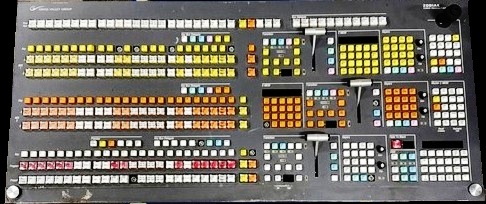
Under Gooding and Thorsteinson, the Zodiak digital production switcher was introduced in 2001 for mid‐range applications. It was an effort to replicate its analog market share in live digital production, which offered many of the high‐end features of the company's flagship Kalypso Digital Production System but carried a smaller $125,000 price tag versus Kalypso's starting price of $185,000. Affordability was a major factor that had made the analog GVG models 200 and 250 the veritable workhorses of the industry. The company was hoping to replicate that in the digital realm. But again, these were SD switchers, and not HD.
It wasn't until 2003 that GVG shipped its first HD version. The Kalypso HD was a native 1080i/720p high-definition version of the very successful Kalypso SD/HD switcher family. It was fully capable of handling HD-SDI signals from the start (no upconversion required) and supported mixed SD/HD operation, which was critical during the 2003–2008 transition period. This was a key component of HD coming of age, as we will see shortly.
Under Gooding's leadership, the company expanded internationally, founding Grass Valley GmbH in Germany. This part of the company has been the most stable and continuously operating part of Grass Valley worldwide. It has survived every ownership change since 2000 without major layoffs or office closures. It employs just under 100, and has been an important bridgehead in German-speaking Germany, Austria, and Switzerland.
He made a strategic buy of Vibrint in 2000 to push forward broadcast newsrooms' conversions from analog to digital technology.
He stepped back from daily operations by late 2000 but remained influential until the 2002 Thomson sale. Gooding established the Gooding Family Foundation in 1997, funding medical research, human services, and arts. He resided in Rancho Santa Fe, California, with his wife, Barbara, and was survived by four children and 19 grandchildren. He passed away at 89 after a long illness. His Grass Valley tenure preserved a broadcasting icon, bridging its Tektronix past to modern digital eras.
Thomson came calling at the end of 2001. It was looking to bulk up its offerings in the media arena. This wouldn't be the only time that Grass Valley was acquired with that object in mind. Thomson paid $172 million. The changes that Tek had contemplated for the Group were mild for what was soon to happen. By the beginning of March 2002, Grass Valley was now part of Thomson. This was the second time that Thorsteinson was involved with selling the same company. It wouldn't be the last.
Thomson might have sensed something that was starting to brew. As we will see shortly, ESPN was central to this part of the story.
Now the HD ecosystem was getting close to achieving critical mass. The problem was that there were two camps. To boil a complex topic down to a couple of sentences: 720p makes sense to folks at ESPN, as it yields more video frames per second than 1080i: 60 versus 30. 720p yields more temporal resolution, or more new pictures per second. 1080i builds a higher resolution picture, with more spatial resolution than 720p but offers fewer pictures per second. 720p gives finer delineation time-wise in slow-motion replays; 1080i will convey slightly richer pictures, especially when presenting the landscape of the Tetons or the Macy’s Thanksgiving Day parade.
In some ways, 720p has ruled up until today. The fact is that because of its progressive nature and fewer pixels per frame, 720p compresses more efficiently into smaller data sets. Many receivers early on used 720p as their internal native format. No matter what format the signal entered as, the receiver converted it to 720p for internal processing and display. Today, common display formats are split between 1920x1080, and 3840x2160.
Early on, the various camps insisted that programming done on location, if done in HD, be done in their chosen format. The 1080i folks didn’t want 720p captured video rendered as 1080i.
The opposite requirement was put forth by the 720p side. At the time, the only practical remedy was to have two sets of imagers. Actually, imagers alone aren’t something that can be replaced in the overall sub-system known as the optical block. Generally, a trip back to the manufacturer was in order. So the only solution was to have two sets of complete optical blocks, one for 720p and another for 1080i.
Since the optical block can be 80% of a camera’s overall cost, it didn't make sense financially. Some early OB players did step up and were willing to “pay the freight” to satisfy the consumer of the most early HD programming, namely ESPN. While players the size of ESPN were a necessity for HD to grow, they alone weren’t sufficient. The critical mass came via technology as we will see.
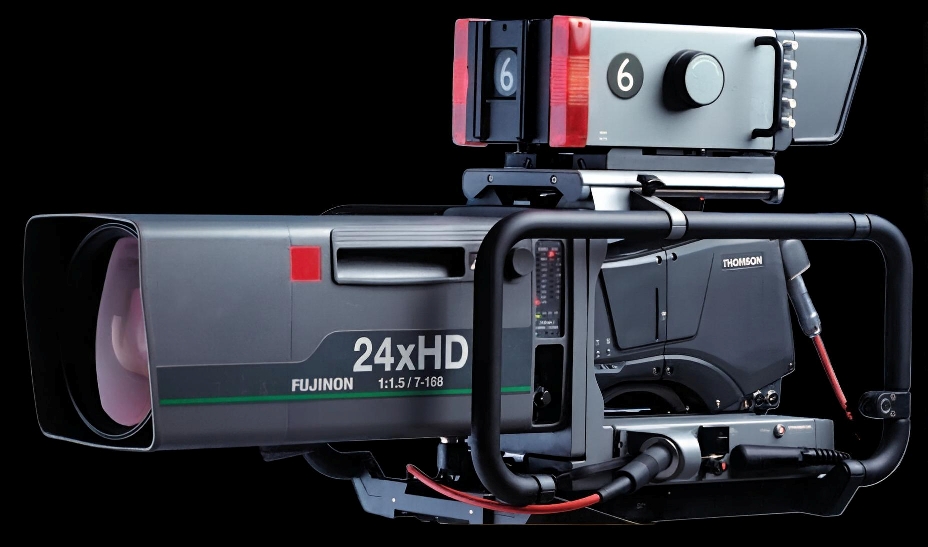
So a little over a month after Thomson started to assimilate Grass Valley, another company gobbled up by Thomson a year earlier, Philips, introduced the LDK-6000 at NAB 2002. It had the Thomson brand. It could switch between 1080i and 720p, which was revolutionary at the time, but it was still an interlaced design. Progressive scan at 1080 was impossible without external boxes. Now the 1080i folks weren't at a disadvantage with upscaled 1080 from 720. Sony followed suit with the HDC-1500, introduced in September 2004 at IBC.

ESPN, around this time, decided to require all programming to be produced in high definition (HD) for its technical production partners, such as remote production trucks, camera vendors, and facility operators. This occurred as part of a broader internal and ecosystem-wide upgrade to support a fully HD workflow. This mandate ensured that all incoming feeds from partners met ESPN's HD standards, eliminating SD (standard definition) production for their content. ESPN set 2009 as the date for this requirement.
So one acquired asset of Thomson solved the camera dilemma. Another was about to solve the production switcher issue. Before its latest sale, Grass Valley had been working on Kalypso HD. At NAB 2003, it was introduced. The Kalypso HD was a native 1080i/720p high-definition version of what had become the very successful Kalypso SD/HD switcher family. It was fully capable of handling HD-SDI signals from the start (no upconversion required) and supported mixed SD/HD operation, which was critical during the 2003–2008 transition period. First commercial shipments and on-air use were in the summer of that year.
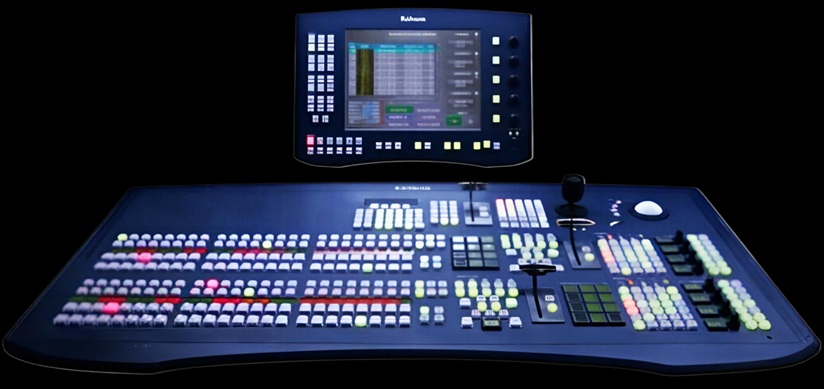
In 2006, Snell & Wilcox introduced the Kahuna production switcher. They will become another aspect of the GV story in the future. Both the Kalypso and the Kahuna excelled in mixed SD/HD workflows during the 2000s transition, with robust keying (linear/chroma) and 3D DVEs for live effects. They supported multi-panel operation for complex productions and were staples in sports broadcasting. Their reliability in mobile trucks and integration with external devices were common strengths.
2003 saw the launch of ESPN HD Simulcast. ESPN introduced its dedicated HD channel (ESPNHD) on March 20, 2003, starting with an MLB game between the Texas Rangers and the Anaheim Angels. Initial HD programming was limited to select live events, with much of the schedule still in SD. Partners were encouraged but not required to deliver in HD. In 2004, ESPN's Digital Center in Bristol, Connecticut, began HD production for flagship shows like SportsCenter, using Grass Valley equipment, including LDK 6000 HD cameras and Kalypso switchers. By 2006, ABC (under joint ESPN production) fully adopted HD workflows for sports broadcasts, including a new HD production center for events like NFL games. This period saw voluntary HD adoption by major partners, but SD remained common for non-live content.
Back to 2006. Sensor density finally got to a point where you could pack enough pixels into the 2/3 inch real estate to sub-sample out a number of formats from a single imager array. The architecture was designed such that there would be limited interpolation between vertical lines or horizontal pixels to derive the formats. That is exactly what HD clients had been opposed to when the reformatting was done downstream outside of the camera. Simple math offered a solution in the vertical direction; the answer was prime numbers.
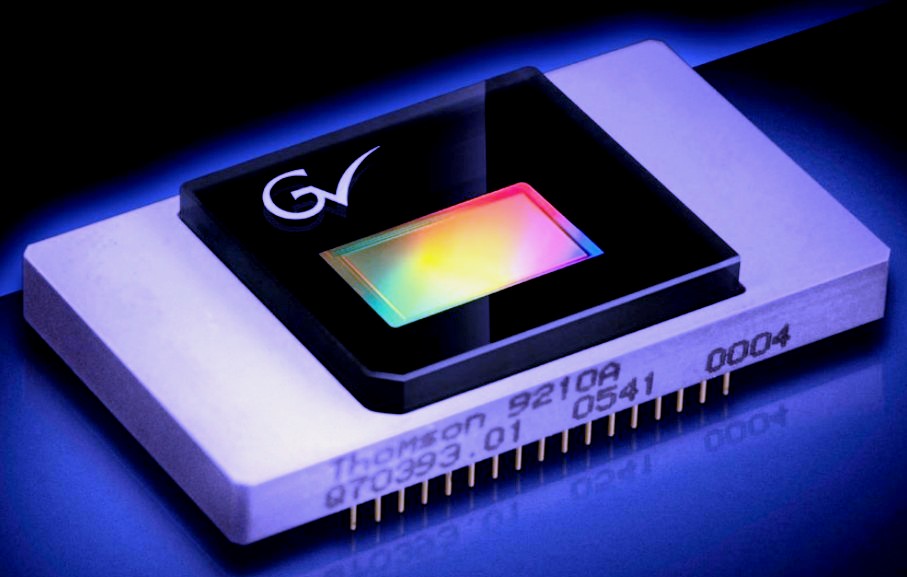
To solve this early issue, the Philips component had developed a sensor that could derive multiple line fields. Their imager was able to output 1440, 1080, 720, 540, 480, and 240 vertical line formats. 1440 is a cinematic format and not much used for television, but 1080 is required for 1080p, 720 for 720p, 540 for each field used in 1080i, 480 for 480p, and 240 for each field of 480i. All the common SD and HD formats were available from a single imager. How did prime numbers allow them to do this?
A prime number is a number that can only be divided by 1 or itself. Prime numbers are 2, 3, 5, 7, 11, etc. If you can find a set of different row numbers that reduces to a combination of prime numbers, then no vertical interpolation is needed; simple sub-sampling would do the trick. One other requirement is that you want to use the smallest prime numbers that you can, as the largest prime number used sets the overall size of the complete array.
As it turns out, the first three prime numbers are all that are needed. Pick any format’s line count, and start dividing by two until you can’t, then divide by three until you can’t, then you’ll find you need to divide once by five to end up with only prime numbers. Or, using the commutative property, start in the opposite order: start by dividing by 5 once, and then three, and then finish with 2.
To check by inverse operation:
480 = 2^5 × 3 × 5, 720 = 2^4 × 3^2 × 5, 1080 = 2^3 × 3^3 × 5, 1440 = 2^5 × 3^2 × 5.
Now what size must the overall imager line count be? Simply take what is called the least common multiple (LCM). What that means with the samples above is that we take the highest power of the 2, 3, and 5 prime factors: 5 times in the case of 2, 3 times in the case of 3, and 5 to the 1st power.
LCM = 2^5 × 3^3 × 5 = 4320
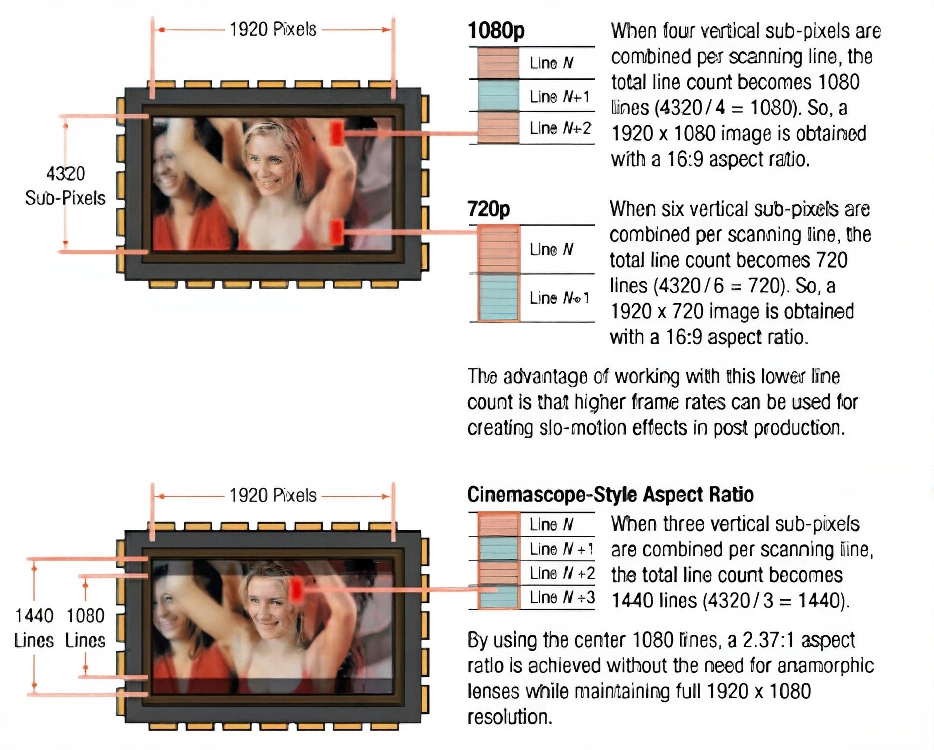
So the total line or row count of an imager to handle the six formats mentioned above is 4,320. It should be apparent what would have happened to the imager row/line count if the prime numbers 7, 11, 13, or, heaven forbid, 17, or 23 were needed, even if they were only needed at the 1st power.
Thus, to make an array with 1080 rows/lines you group sets of four successive lines together: 720 groups of six rows/ line. For SD (480I = 240 x 2), 18 lines are grouped together. Thus, vertically, an image cell will consist of the combination or summation of several pixels; the number depends on the required scanning format or TV lines.
To have an imager where you could directly sub-sample those three horizontal pixel rates as whole numbers, you’d need 11,520 pixels in each horizontal row. The column width for each pixel would be incredibly small. So the bottom line is horizontally interpolation is still occurring in most cases.
This technology produced the Philips/Thomson LDK 6000 mk II. It was the first camera in the world that could natively switch, with a single sensor and no external converters, between all three major HD formats: 1080i, 720p, and now 1080p. Sony's equivalent, matching the 6000's full tri-format capability, was the HDC-1550, introduced in 2006 at NAB.
With the exception of Sony, most of the early movers and shakers creating the required HD infrastructure would eventually fly the Grass Valley banner.
 Building a labyrinth and racing towards critical mass does not always work out!